Music is beyond merely acquiring skills. Music is emotion and has the ability to express in ways that words cannot. Music needs to be felt by the musician and only then will it move their audience. Just as every individual is different, the music created by different people is also unique to their personalities. This uniqueness should be nurtured and must not be lost to “fit in”.
In today’s times everything seems to have become a competition and this trend has crept into the music realm as well. What we need to realize is that examinations in general have the purpose of keeping track of progress and certifying the progress, but not otherwise. Just like schooling, music in many institutes is being taught with an aim to complete a certain grade so you get certified and then move on to focus on the syllabus of the next grade.
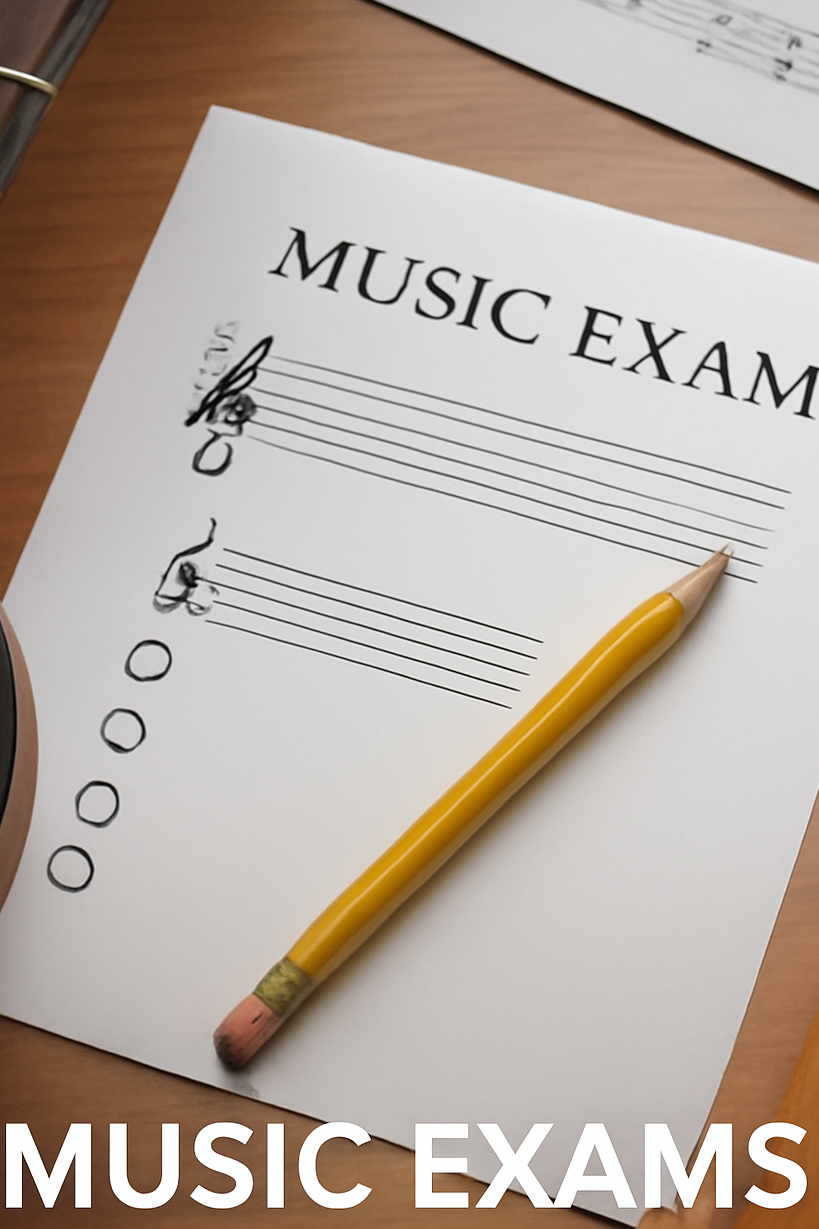
So, when should we take an exam? Sometimes in the process of learning we feel lost and are unsure of our progress, or there are times when we are curious to know about where we stand with respect to the standards of the world. That is when music exams come into play. What should matter more after an exam should be the experience of performing in an exam hall and the comments that are written on the sheet about the performance in various aspects of the grade exam rather than the score attained. We can work on the flaws based on the comments but not on the score.
Graded exams in music range from 1 to 8 followed by 4 diplomas if you want to get into studying further. There are prerequisites in various boards which need to be met to be able to move on to the next level. But appearing for each and every grade is quite unnecessary.
Being in the teaching field for over a decade I’ve learnt that every pupil is different. There are some who progress quite rapidly while others end up dragging themselves through, even though the interest might be at the same level. So, since examinations are scheduled at a certain time in the year it either slows down the fast learner in a certain way or pressurizes the slower ones to meet with the deadline. This of course happens if exams are treated as the only thing to aim for. But, exams can play a very important role for pupils who want to learn, but practice if and only if there is something to look forward to.
It is definitely the teacher’s or the institute’s responsibility to have a balanced repertoire for every pupil so that they get to explore all genres and eventually learn for themselves about what interests them and what does not. For a matter of fact, even the admission into music colleges for further studies is based on your performance and musicality at the audition and not on your certificates or the score attained in your grade exams.
SUMMARY
- Graded exams are important to keep track of the skill level.
- It helps us recognize our flaws and work on them.
- It must be used as a check point and not as a goal.
- Exam syllabus should be a part of the curriculum and not the ONLY curriculum.